Central Africa · Chad
Chebe
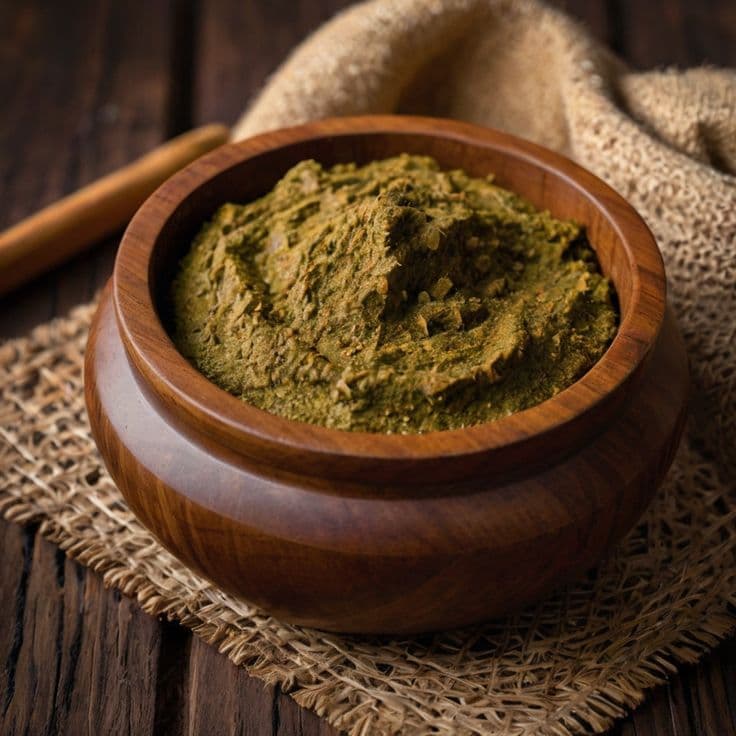
Croton zambesicus leaf powder
“Helps retain length, reduces breakage, seals the cuticle, locks in moisture”
How It Works
The mechanism.
Chebe (Croton zambesicus) is prized for the way its tannin- and proanthocyanidin-rich leaf powder coats the hair shaft. That botanical film lies over the cuticle, helping each strand hold on to moisture and easing the friction - and the constant swell-and-shrink of wetting and drying - that leads to breakage during everyday handling. The result is hair that feels stronger as you work with it and keeps more of the length it grows, the single biggest factor in long, healthy Type 4 hair.
Origins & Tradition
Where it comes from.
The Sara women of southern Chad have used chebe rituals for centuries. Hair is sectioned, coated with chebe paste mixed with clove oil, butter, and fragrant woods, then twisted to waist length — lengths that would be impossible without protection from the region's harsh, dry climate. The practice is passed from mothers to daughters; hair care is inseparable from identity, marriage eligibility, and community standing. Colonial disruption labelled these rituals 'primitive,' causing a century-long rupture. The modern natural hair movement is actively recovering this knowledge.

Active Compounds
The chemistry.
The Research
What the science says.
Laboratory imaging of chebe-treated hair has documented a protective film over the cuticle under electron microscopy - consistent with the smoother feel and improved strength generations of Sara women have observed. The tradition itself is the longest-running evidence: hair grown and tended to remarkable lengths, passed from mother to daughter across centuries.