The Hair That Reaches the Waist
If you have seen the photographs, you do not forget them. Women of the Basara and Sara communities of Chad, in the Kanem region near Lake Chad, with hair that falls to the waist, the hips, sometimes further — thick, dark, retained over years. It is the kind of length that, in the natural hair world, is spoken about almost as a myth.
It is not a myth, and it is not magic. It is a practice — and like most of the continent's deepest hair knowledge, it lives not in a laboratory but in the hands of women who learned it from their mothers and will teach it to their daughters. The compound at the centre of it is called *chebe*. But to understand chebe, you have to understand that the powder is only one part of a ritual, and the ritual is the real technology.
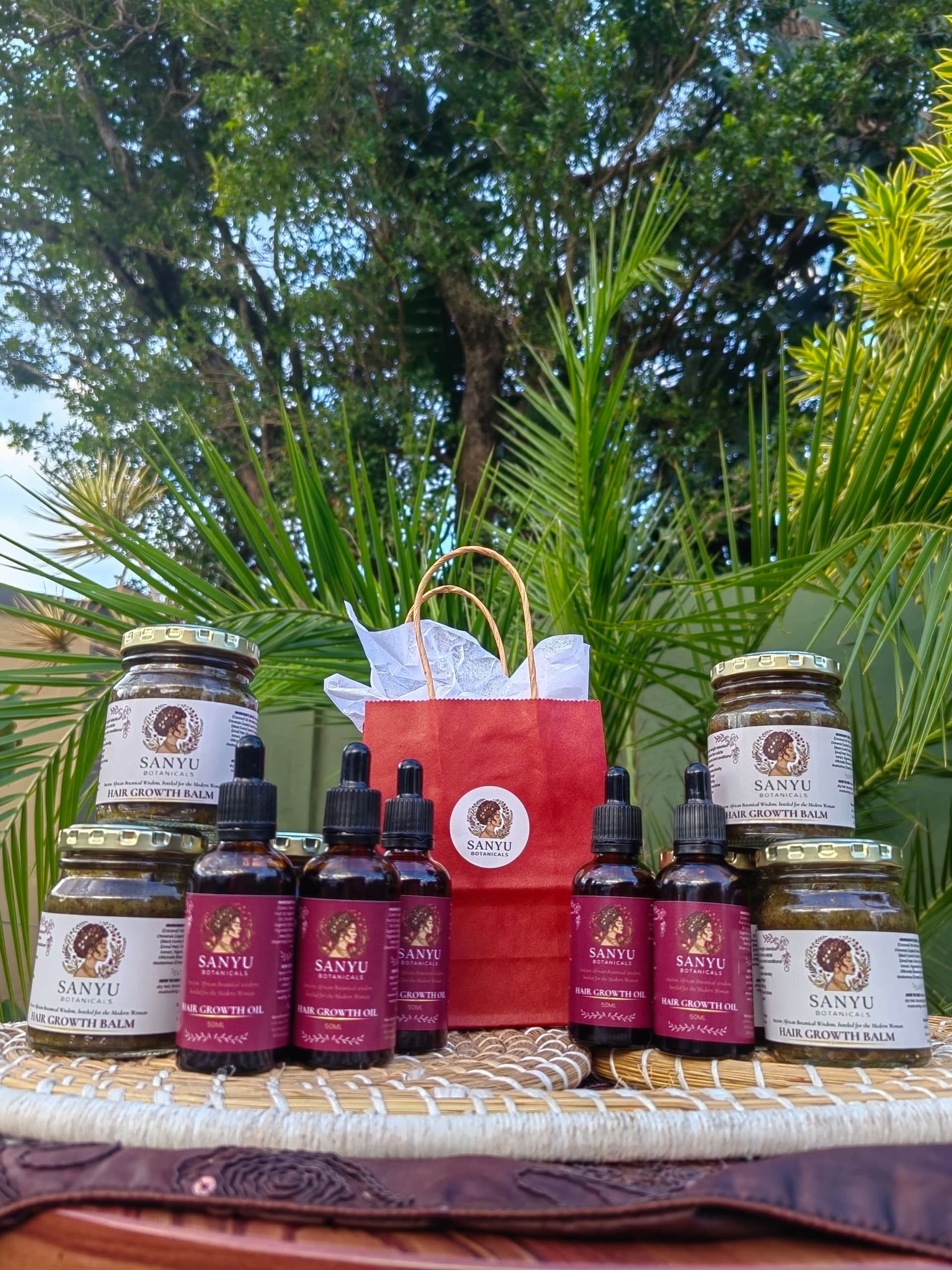
The balm, mixed by hand — chebe through the lengths.
What Chebe Actually Is
Chebe is not a single plant. It is a traditional powdered blend, and the exact recipe varies by family and region, but it generally brings together several ingredients ground fine: the seeds of *Croton* species, *mahlab* (the kernel of a wild cherry), cloves, a tree resin, and aromatic seeds such as those of the lavender-scented *Lavandula*. Ground together, they make the greyish powder that the women apply.
What matters for the hair is what this blend does mechanically. Chebe is not absorbed into the body. It does not enter the bloodstream or stimulate the follicle. It works on the *outside* of the hair — coating the strand, smoothing and binding the shaft, and dramatically reducing the friction and breakage that, for Type 4 hair especially, is the true enemy of length.
This is the single most important thing to understand, and we say it in every place we can: chebe is a retention agent, not a growth stimulant. It does not make hair grow faster. Hair grows at roughly the same rate for most people — a little over a centimetre a month. What chebe does is help you *keep* what grows, by protecting the strand so that it does not snap off before it can gain length. The waist-length hair of the Kanem women is not faster-growing hair. It is hair that almost never breaks.
“Understanding this protects you from disappointment and from dishonest marketing. Anyone selling chebe as something that "grows" hair has either misunderstood it or is hoping you have.”
Under the microscope
A single strand, magnified
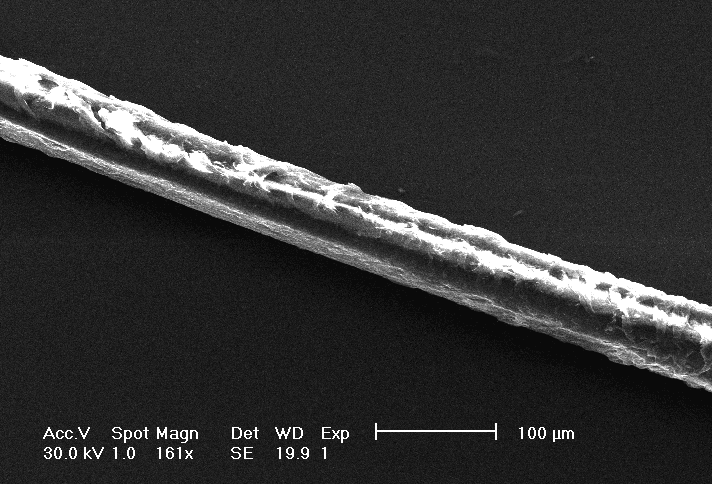
Under the electron microscope a human hair is a rope of keratin sheathed in the cuticle — the strand's outer armour. Oils and butters lie over it, slowing the moisture loss that costs you length.
SEM: Foreade · CC BY-SA 4.0 · Wikimedia Commons
The Ritual, Not Just the Powder
The powder alone does little. The practice is what works, and the practice is specific.
The hair is first worked with oil and a butter — often a local karkar oil or a butter that softens and prepares the strand. Then the chebe powder is applied to damp, oiled hair, concentrated on the lengths and ends rather than the scalp — because it is the lengths that need protecting, not the roots. The hair is then braided or twisted and, crucially, *left alone*. The women do not manipulate it daily. They re-apply oil and water over the chebe coating to keep it pliable, and they re-do the full treatment only every few days.
Low manipulation is half the secret. The chebe protects the strand; the discipline of leaving the hair bound and untouched protects it further. Length retention is as much about what you *do not* do to your hair as what you put on it.
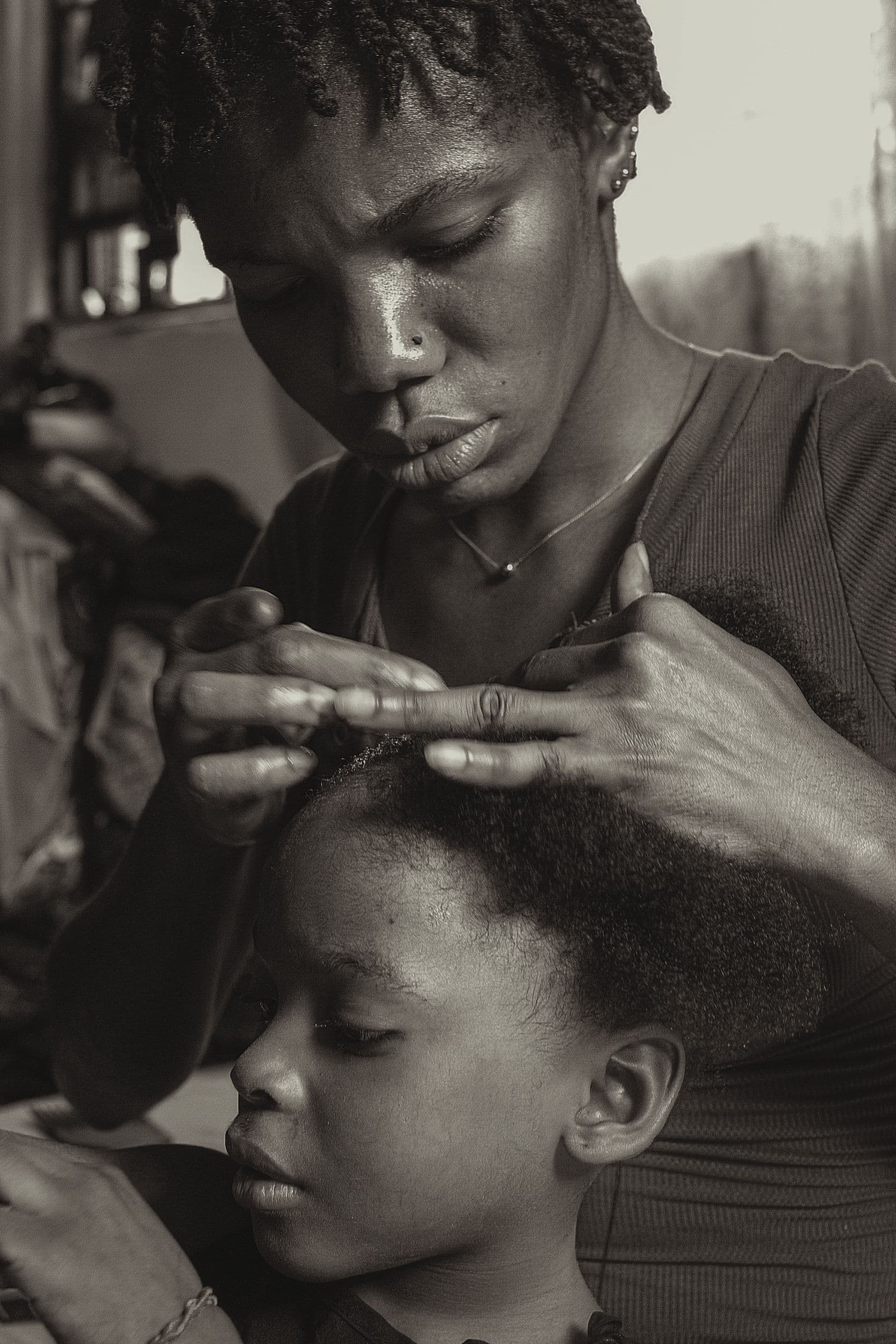
And it is communal. The application is often done by another woman — a mother, a sister, a co-wife, a friend — in the same way braiding has always been a shared, social act across the continent. The knowledge passes down through these sessions. A girl learns chebe the way she learns everything important: sitting in front of an older woman who has done it a thousand times.

Honouring It Honestly
When a tradition this specific travels out into the world, it can be flattened — turned into a single bottle promising miracles, stripped of the ritual and the context that actually made it work. We have tried hard not to do that.
What we have taken from the Kanem practice is the principle, applied honestly: that the great lever for Type 4 length is *retention*, and that a properly formulated coating plus low manipulation is how you achieve it. The chebe compound in the Sanyu Hair Growth Balm works the way it works in Chad — on the outside of the strand, smoothing and binding the shaft to reduce the breakage that costs you length. We pair it with oils and butters because, as the women of Chad have always known, chebe is not used dry and alone; it is used as part of a system.
And we tell you the truth about it, because the women who developed this practice deserve to have it represented accurately. Chebe will not grow your hair faster. Used properly — coated through the lengths, paired with oil and moisture, in a low-manipulation, protective routine — it will help you keep far more of what you grow. Over a year, over two years, that is the difference between hair that hovers at the same length forever and hair that finally, visibly, gains.
The women of Kanem proved the method generations ago. We are just keeping their receipt.