The Apothecary Was Always Here
There is a particular irony in walking into a shop and finding marula oil or baobab oil sold at a premium as a rare discovery — when these are oils that African women have pressed, traded, and worked into their hair and skin for centuries, from trees growing in their own districts.
The global beauty industry has a habit of "discovering" what was never lost. So it is worth laying out, plainly, the apothecary the continent already had: the indigenous oils and butters of Africa, what they are, and why the women who used them were not waiting for anyone's permission or research budget to know they worked.
The oils Africa already had — straight from the tree.
Marula — Southern Africa
The marula tree (*Sclerocarya birrea*) grows across Southern Africa and is woven deep into the cultures around it — its fruit fermented into a celebrated drink, its kernels pressed for oil. Marula oil is rich in oleic acid, a monounsaturated fatty acid that is emollient and penetrates the hair shaft well, and it carries a high antioxidant load that makes it remarkably stable — slow to go rancid, even in heat.
For women in Namibia and the northern reaches of South Africa, marula was a working oil long before it was a luxury label: pressed by hand, often by women who held the knowledge of the trees, and used on hair and skin against a dry, sun-hard climate.
Cold-pressed, the way the continent always made it.
Baobab — the Tree of Life
The baobab (*Adansonia digitata*) is one of the most recognisable trees on earth and one of the most useful. The oil pressed from its seeds is rich in vitamins A, D, and E and in a balanced profile of omega fatty acids. It absorbs without heaviness, conditions the shaft, and supports the scalp.
“The baobab is called the tree of life for good reason — fruit, leaves, bark, and seed all feed into food, medicine, and cosmetics. Its seed oil is simply one more gift from a tree that an entire ecology of human use has grown up around.”

Mafura — Southern and East Africa
Mafura butter, pressed from the seeds of the *Trichilia emetica* tree, is a traditional Southern and East African hair and skin treatment with a long history of use in the regions where the tree grows. Solid like shea at room temperature, it is used to seal moisture, soften the hair, and protect the skin. In many communities it has been a household staple — a butter made locally, traded locally, and trusted long before any laboratory weighed in.
Under the microscope
A single strand, magnified
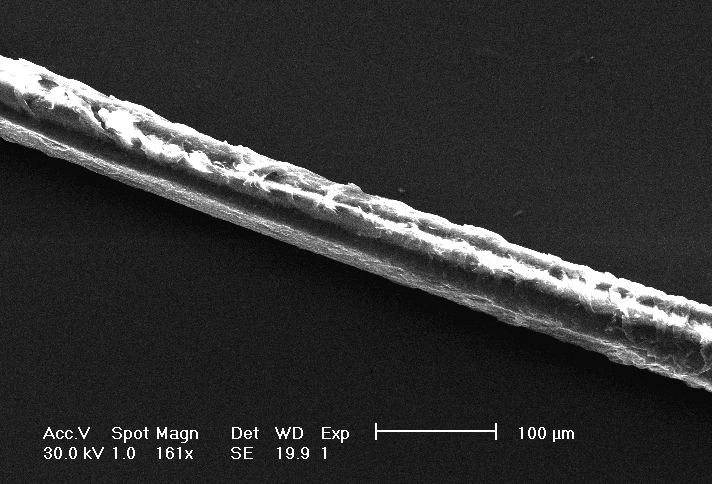
Under the electron microscope a human hair is a rope of keratin sheathed in the cuticle — the strand's outer armour. Oils and butters lie over it, slowing the moisture loss that costs you length.
SEM: Foreade · CC BY-SA 4.0 · Wikimedia Commons
Ximenia — the Desert's Oil
Ximenia oil, pressed from the kernels of the sour plum (*Ximenia* species), is used by the Himba of Namibia and by San communities, among others. It is prized for its unusual fatty acid profile — including ximenynic acid, uncommon in the plant world — and for its deep emollient, conditioning quality.
The Himba famously combine it with red ochre to dress hair and skin in a water-scarce environment, where an oil that conditions and protects without the need for washing is not a luxury but an adaptation. Ximenia is desert technology: an oil suited precisely to the place it comes from.
The oils Africa already had — straight from the tree.
Shea — Women's Gold
No account of African oils is complete without shea butter (*Vitellaria paradoxa*), pressed from the nut of the shea tree across the savannah belt of West Africa. It is so central to the women who harvest and process it — almost always women — that it carries the name *women's gold*.
Shea is rich in stearic and oleic fatty acids and in a generous unsaponifiable fraction (the part that does not turn to soap) that carries vitamins and compounds with genuine skin and hair benefits — including cinnamic acid esters that offer a mild natural defence against the sun. It seals, softens, and protects, and the labour of making it has supported the economic independence of West African women for generations.
Cold-pressed, the way the continent always made it.
Why This Matters For Your Shelf
There are two reasons to know this history, beyond the pleasure of knowing it.
The first is discernment. When an oil is sold to you as a miracle from somewhere far away, it is worth knowing that the continent is full of oils with long, proven track records, pressed close to where their trees grow, often by the very communities who first understood them. You do not have to buy mystery. You can buy lineage.
The second is respect for the source. These oils are real agricultural products tied to real ecosystems and real communities — often women's cooperatives whose knowledge and labour make the oil possible. A brand that uses African botanicals owes those sources honesty about where the material comes from and what it can actually do.
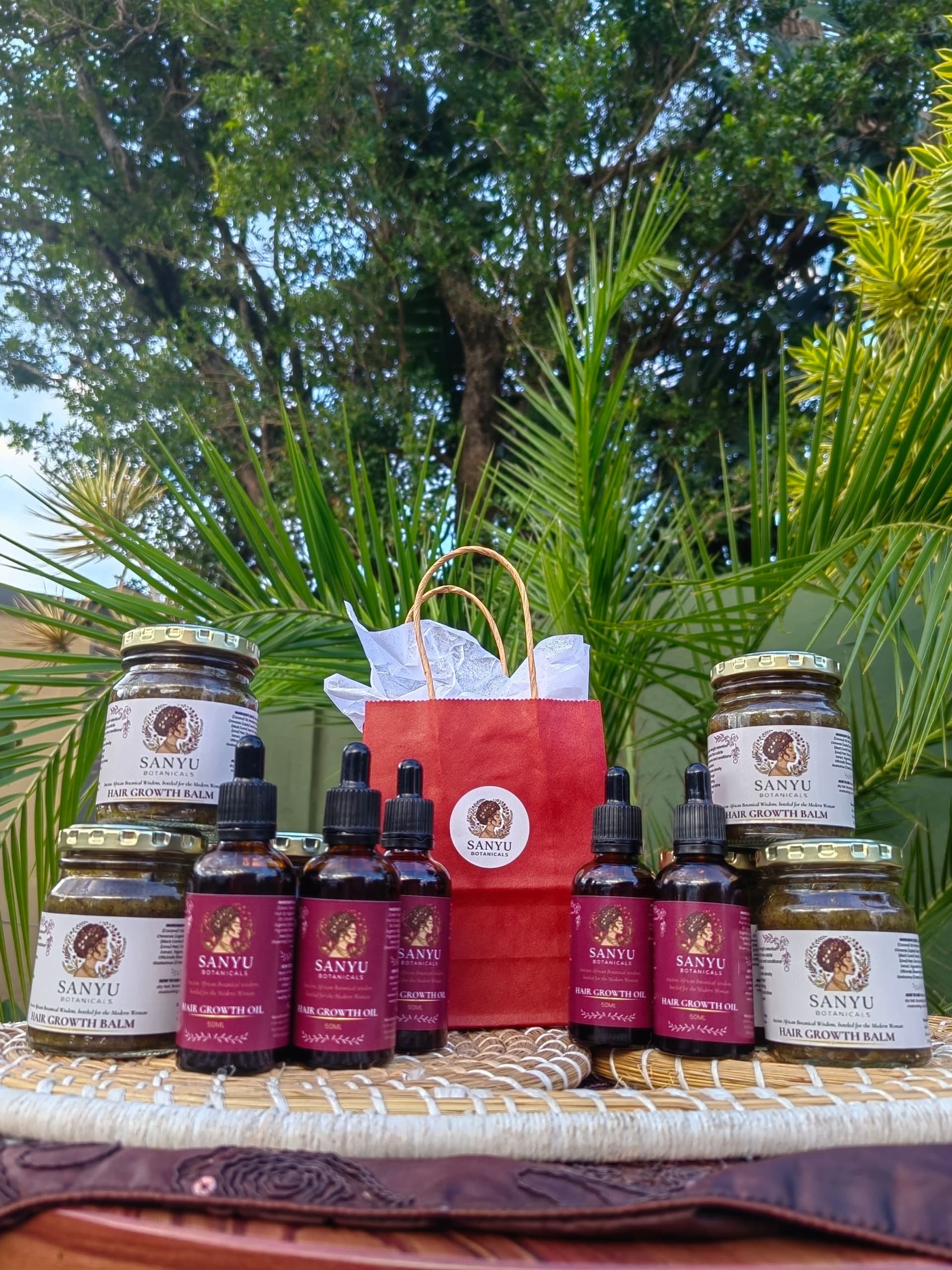
That is the standard we hold ourselves to. We build our formulas on botanicals with genuine heritage and genuine evidence, and we name them plainly — what is in the bottle, where the knowledge comes from, and what it is actually for. The trees were generous. The least we can do is be truthful about them.