Why Washing Hurts More Than You Think
There is a moment most women with Type 4 hair know well: you wash your hair, and even though you followed the steps, something feels wrong. The hair feels rougher than before. It tangles more than it should. By the time you get to detangling, strands are coming out in quantities that make you anxious. You blame your shampoo, or your technique, or your hair.
The problem, in most cases, started before you even opened the shampoo bottle. The act of wetting Type 4 hair without any protection is already the first injury.
Under the microscope
Inside the fibre
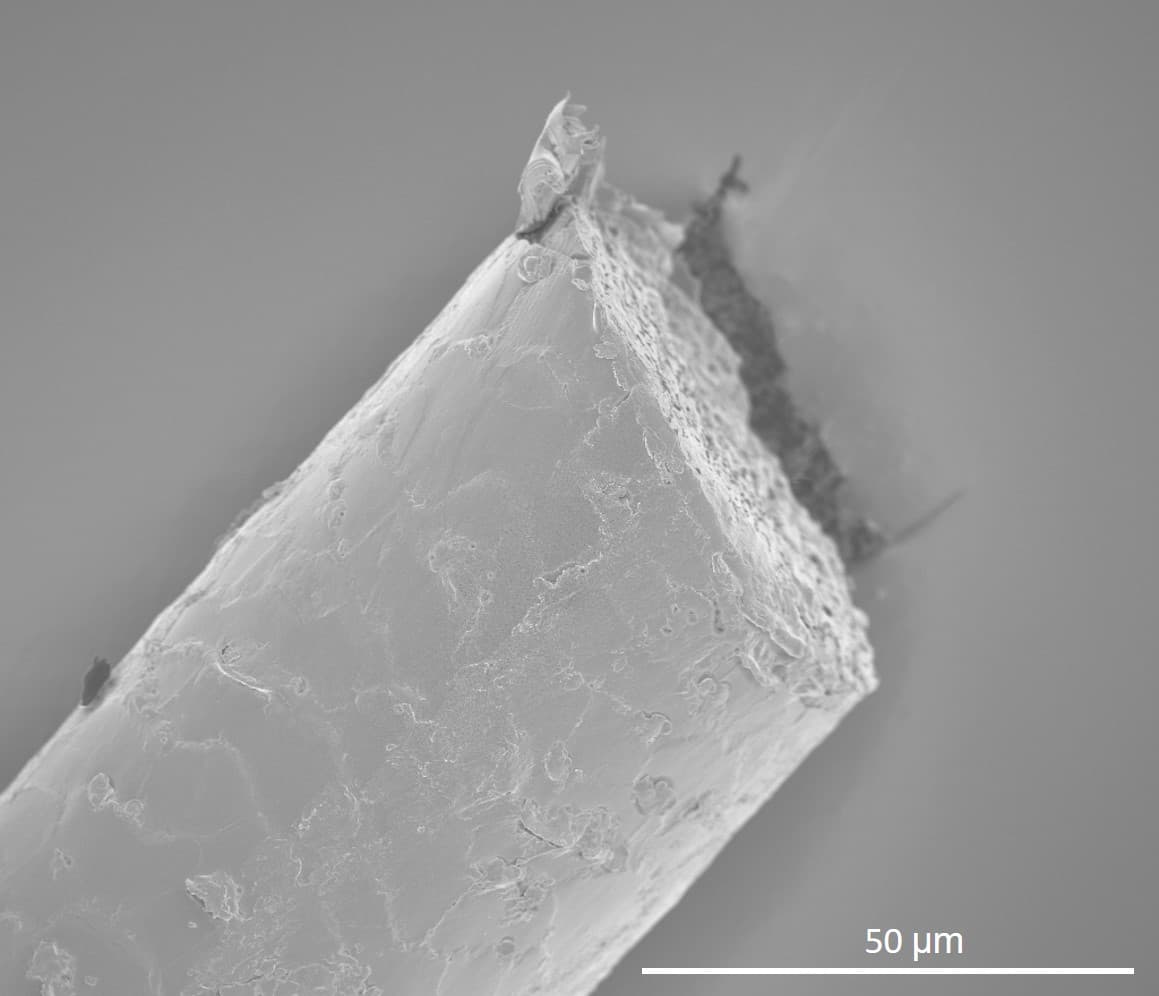
At a cut end the dense cortex shows — the keratin core that holds the hair's strength and elasticity, and lets a coil stretch and spring back.
SEM: Lola Sõukand · CC BY 4.0 · Wikimedia Commons
What Shampoo Actually Does
Shampoo is a surfactant delivery system. Surfactants — surface-active agents — are molecules with a hydrophilic (water-loving) head and a lipophilic (oil-loving) tail. When you mix shampoo into water and work it into your scalp, the lipophilic tails of the surfactant molecules surround the oils and debris on the scalp and hair shaft, and the hydrophilic heads face outward toward the water. The water rinses away, taking the surrounded oil with it.
This is exactly what shampoo is supposed to do. The problem is that it cannot discriminate between the sebum and product buildup you want to remove and the structural lipids embedded within the hair shaft that hold the fibre together.
The internal lipid matrix of the hair fibre — primarily 18-methyleicosanoic acid (18-MEA), a fatty acid covalently bonded to the outer cuticle surface — is the primary barrier that keeps the hair shaft cohesive. Repeated shampooing, particularly with sulfate surfactants, progressively strips this layer. As the lipid barrier degrades, the cuticle becomes more prone to lifting, the hair becomes more porous, and the shaft becomes structurally weaker.
A study published in the *Journal of Cosmetic Science* (2003) confirmed that successive shampooing treatments cause measurable increases in hair combing force and fibre surface roughness — both indicators of cuticle damage — and that these changes accumulate with each wash cycle.
Hygral Fatigue: The Hidden Enemy
There is a second mechanism at work that most hair care education does not cover adequately: hygral fatigue.
When dry hair is exposed to water, it swells. The cortex absorbs water and expands — the hair shaft can swell up to 20% in diameter when wet. When it dries, it contracts. This cycle of swelling and contracting is not inherently dangerous when it happens occasionally. When it happens repeatedly, and rapidly, it causes hygral fatigue: a breakdown of the protein bonds within the fibre that gives it structural integrity.
For Type 4 hair, the tight coil of the curl means that each curl apex — every point where the strand bends — is already under mechanical stress. Add repeated swelling and contracting, and these apex points become fracture points.
The signs of hygral fatigue are subtle at first: limp, mushy hair that has poor elasticity when wet; hair that seems to stretch without bouncing back; unusual mid-shaft breakage. Left unaddressed, hygral fatigue can cause significant length loss that appears inexplicable — the hair is growing but it keeps breaking off.
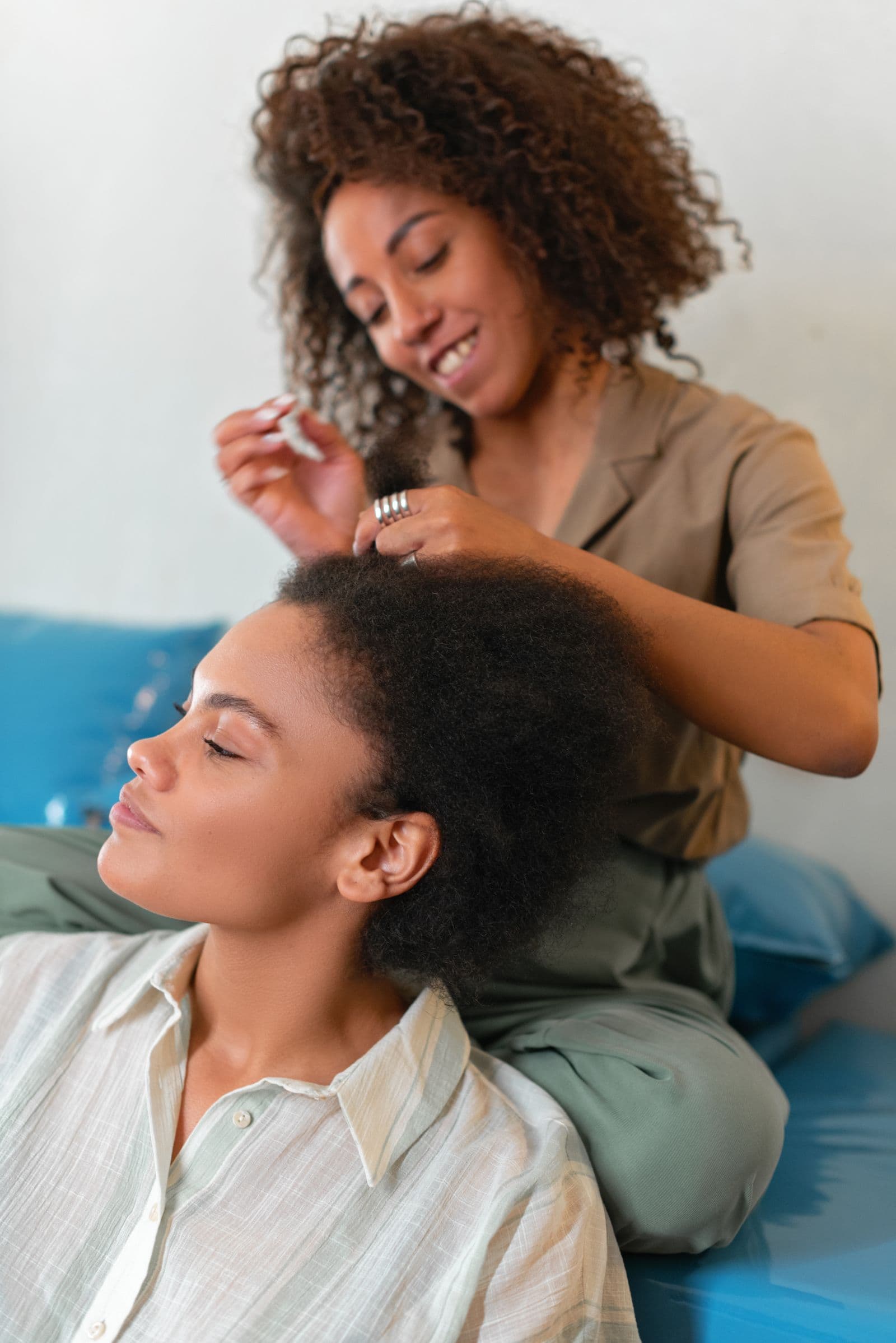
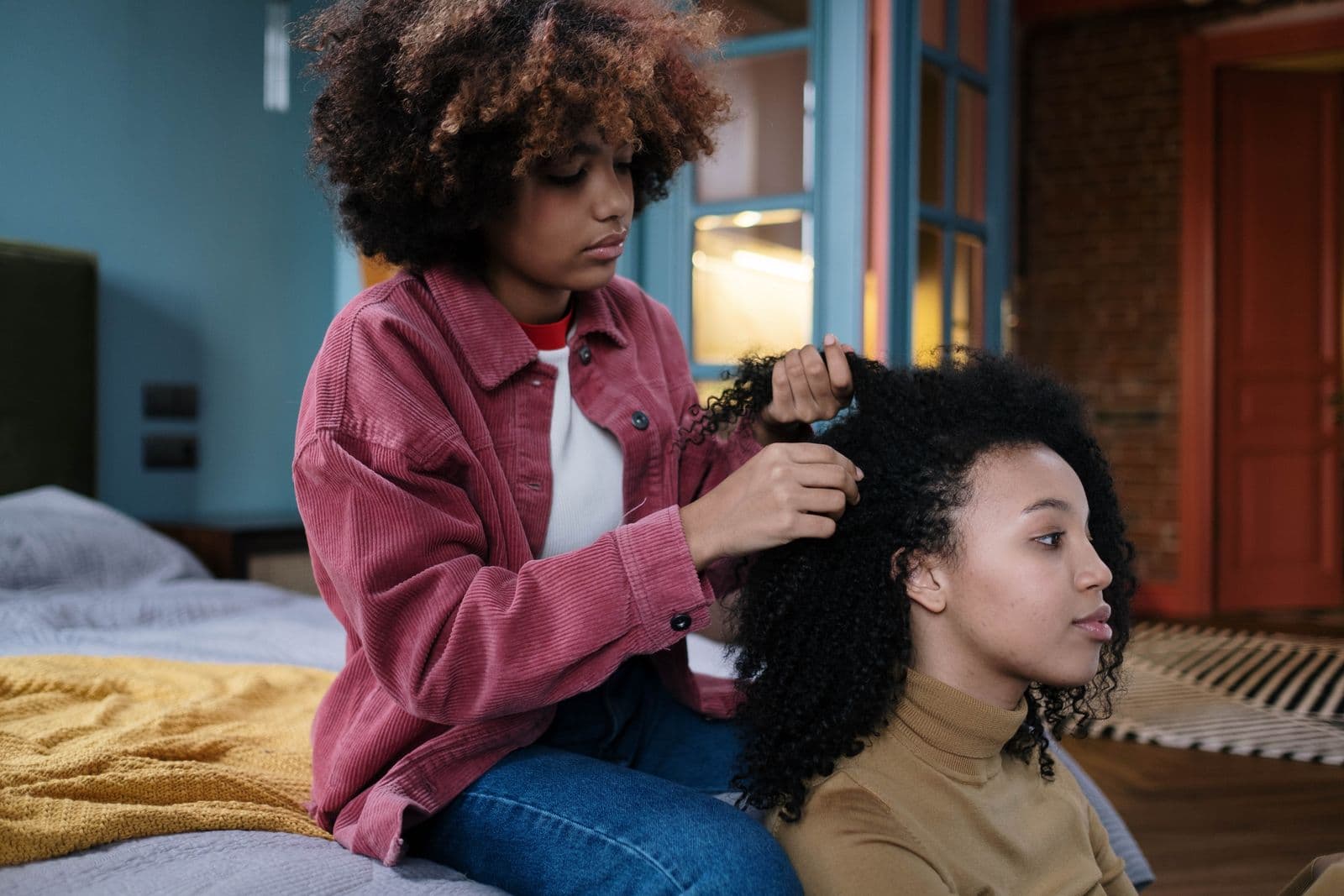
The balm as a pre-poo, worked through by hand.
Protein Loss During Washing
Every time you wash your hair, some protein is lost. This is not a malfunction; it is a chemical inevitability. The proteins that comprise the cortex of the hair shaft — predominantly keratin — are held together by disulfide bonds, hydrogen bonds, and ionic bonds. Water weakens hydrogen bonds directly. Shampoo surfactants, when the lather is mechanical and vigorous, can further disturb these bonds.
Studies measuring protein loss during shampooing consistently find that hair already damaged by chemical processing, heat, or UV exposure loses significantly more protein per wash cycle than healthy, undamaged hair. This creates a compounding problem: damaged hair needs more careful washing, but the washing itself causes further damage.
For women transitioning from relaxer to natural hair, or women who use heat regularly, or women whose hair has been depleted by mineral deposits from hard water, this cycle is the reason their hair never seems to catch up.
Under the microscope
Closer still
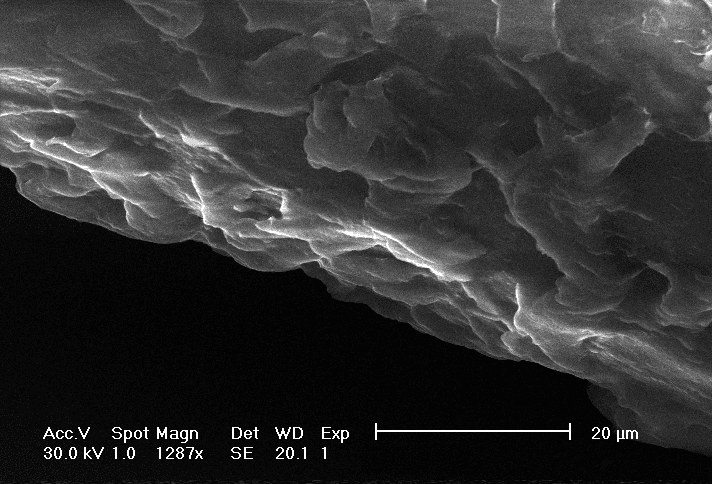
At higher magnification the cuticle's rough, tiled surface emerges. It lies smooth when the hair is moisturised and sealed, and lifts when it is dry or damaged — which is when breakage begins.
SEM: Foreade · CC BY-SA 4.0 · Wikimedia Commons
What a Pre-Poo Does
A pre-poo — pre-shampoo treatment — addresses all three of these mechanisms before the water runs.
By coating the hair shaft with a cream, oil, or balm before wetting, you accomplish the following:
1. You reduce surfactant penetration. A lipid barrier on the shaft surface means the surfactant has to work through more material before it reaches the structural lipids you want to protect. The surfactant removes the pre-poo application and surface debris, but the structural lipids are better protected.
2. You moderate the swelling. An occlusive coating on the shaft reduces the rate at which water enters the cortex, slowing and moderating the hygral swelling. The hair still wets — the pre-poo is not waterproof — but the swelling is more gradual and less extreme.
3. You create slip before detangling. Pre-pooing the hair before washing allows you to detangle gently while the treatment is in, before the hair gets wet and the cuticle raises further. Detangling on dry, lubricated hair causes less breakage than detangling sopping wet hair under running water.
The Sanyu Balm as Pre-Poo
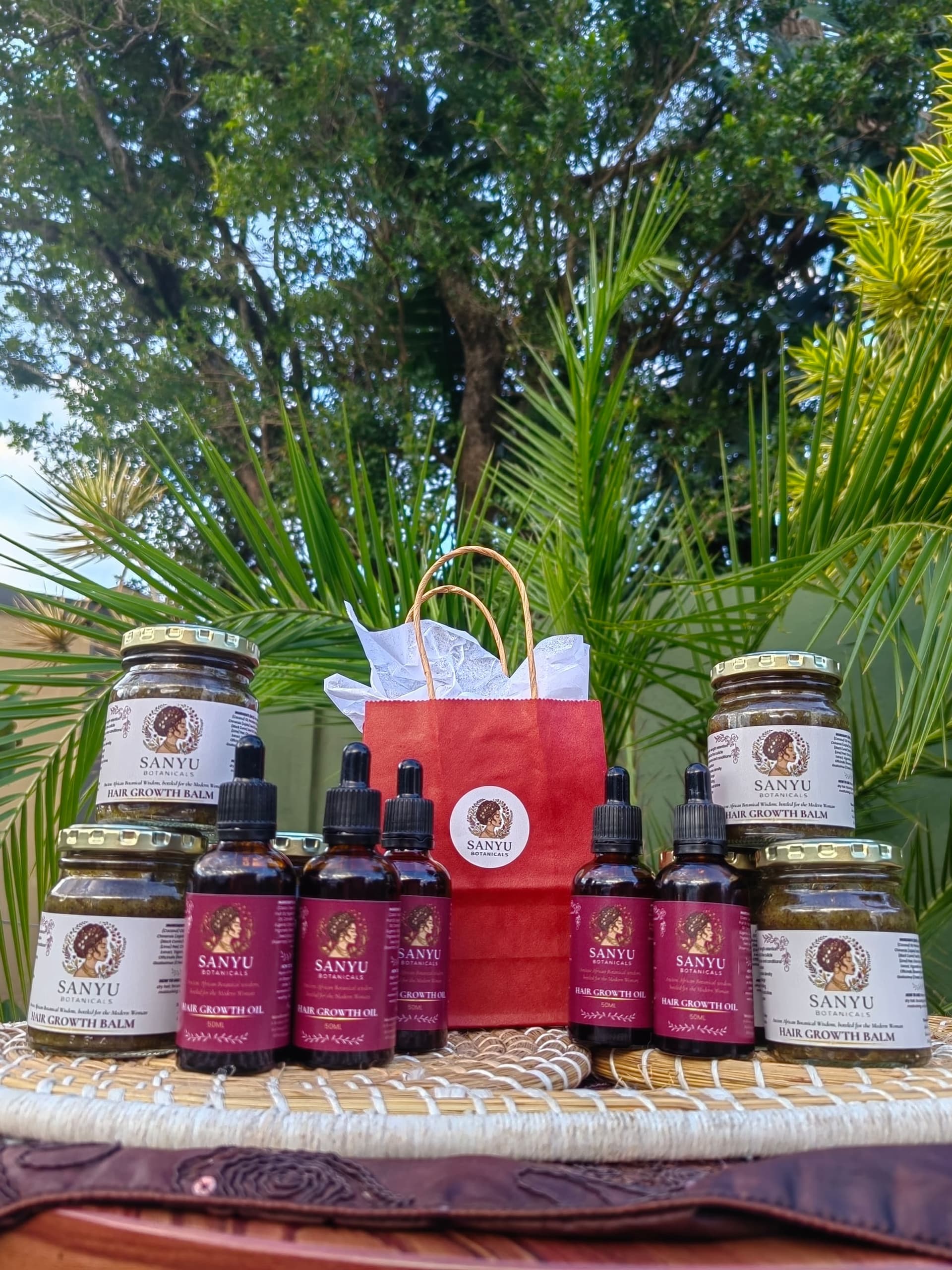
The Sanyu Hair Growth Balm is formulated for exactly this application. Its base of shea butter and coconut oil creates an occlusive barrier that moderates water uptake. The chebe compound coats the shaft surface, smoothing the cuticle and reducing friction between strands. The 500ml of Signature Oil blend embedded in the balm means the pre-poo is simultaneously conditioning the shaft from the inside out while the balm protects the exterior.
Application: divide dry hair into four or more sections. Apply a generous amount of balm to each section, working from tip to root — tips first, because they are the oldest, driest, most damaged part of the strand. Smooth the balm through with your fingers, ensuring full coverage. Twist or braid each section loosely to keep them separated.
Leave the treatment on for a minimum of 30 minutes. 60 minutes is better. Overnight under a satin cap is best.
Then wash as normal. You will notice immediately: less tangling during the wash, less post-wash breakage, and hair that feels softer at the ends than it ever did without the pre-poo step.
This is not a luxury add-on. For Type 4 hair washed weekly, the pre-poo is the difference between a wash day that depletes your hair and a wash day that restores it.