Your Hair Is Not Climate-Neutral
Hair care advice produced in North America and Europe is calibrated to Northern Hemisphere conditions: cold winters that peak in December–February, humid summers with different UV intensity, different prevailing humidity levels. Much of what circulates as universal natural hair guidance is, in practice, seasonal advice designed for Chicago or London.
South Africa runs on different rhythms — and the difference is not merely academic.
The South African summer peaks December through March, when most of the northern world is in the middle of winter. The Highveld receives approximately 70% of its rainfall in summer thunderstorms. The Cape has a Mediterranean climate, dry in summer and rainy in winter. The Eastern Cape coast — including East London — has a more temperate, year-round pattern. Limpopo and the Northern Cape have semi-arid conditions that affect hair fundamentally differently from the humid coastal east.
If you are following a hair routine designed for a Northern Hemisphere autumn when you are in the middle of a Johannesburg summer, the mismatch is structural.

Summer (December–March): Heat, UV, and Humidity
The Highveld summer combines high UV radiation with sudden, intense humidity around afternoon thunderstorms, followed by a rapid return to dry air. This cycle — humidity spikes followed by rapid drying — is particularly hard on Type 4 hair.
What humidity does
High atmospheric humidity increases the moisture content in the hair shaft. For naturally porous hair, this can cause hygral swelling — the shaft swells as it absorbs atmospheric moisture, and the cuticle lifts. When the air dries rapidly, the shaft contracts, and the lifted cuticle scales catch on each other, creating frizz. For well-moisturised hair with good cuticle integrity, this is manageable. For dry, high-porosity hair, the rapid swelling and contracting cycle accelerates hygral fatigue.
What UV does
Ultraviolet radiation degrades keratin protein in the hair shaft. UVB radiation specifically targets the disulfide bonds that hold keratin together, causing photo-oxidation that degrades methionine residues in the protein structure. Research published in the *Journal of Photochemistry and Photobiology* (2007) confirmed measurable protein loss and mechanical property changes after sustained UV exposure. Hair colour fades (melanin absorbs and is degraded by UV). Hair feels dry and rough.
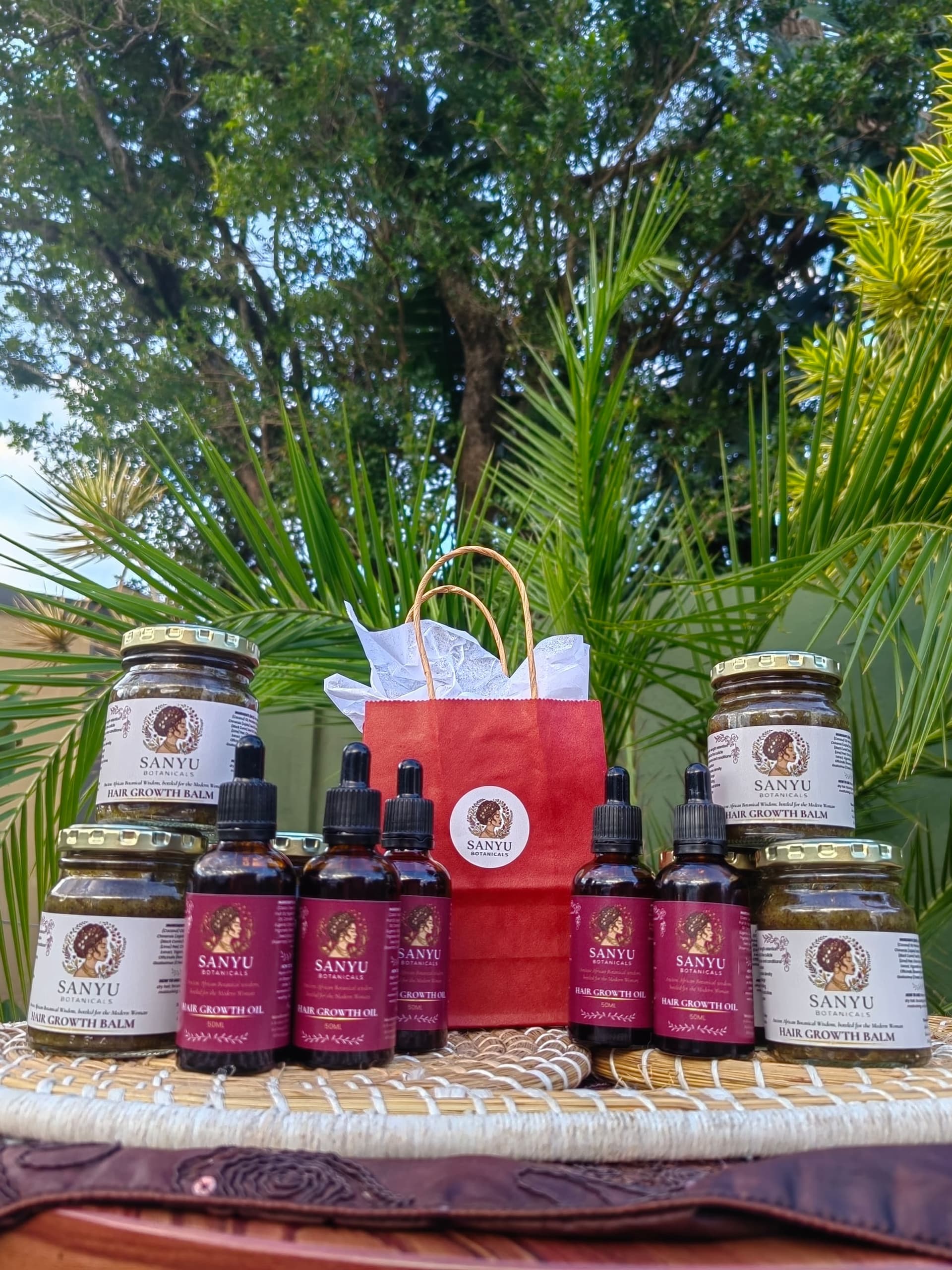
The primary UV protection in hair comes from melanin — which is why darker hair is inherently more UV-resistant than lighter hair — and from occlusive coatings that reflect or absorb UV before it reaches the cortex. Shea butter contains cinnamic acid esters that provide a mild SPF equivalent. The Sanyu Balm applied as a sealant and refresher provides both occlusion and the UV-moderating effect of shea's natural cinnamic acid derivatives.
Summer protocol adjustments
- Use a lighter hand with the balm on humid days — apply to damp hair as a sealant, not dry hair as a moisturiser, to avoid the feeling of product-weighted hair in humidity. - Clarify monthly to remove the product buildup that summer sweat and activity accelerates. - Apply the Signature Oil to dry or protective-styled hair before outdoor time. The film provides UV moderation. - Wash more frequently — every 5–7 days rather than every 7–10 — to remove sweat and scalp buildup that summer heat accelerates.

Coastal Summer (Cape Town, Durban, East London)
The coastal summer introduces salt air and ocean exposure. Salt (sodium chloride) is a hygroscopic compound — it draws moisture from wherever it can find it, including your hair shaft. After a day at the beach or in an ocean breeze, the salt deposits on the shaft create the same surface-roughening, moisture-competing effect as hard water minerals.
A diluted ACV rinse after beach days removes salt deposits before they can dry fully onto the shaft. If you swim in the sea regularly, apply a generous balm coating to your hair before entering the water — the occlusive barrier reduces salt penetration — and rinse with fresh water immediately after swimming.